Introducing the Pin Oak Platform
Why we built Pin Oak: independent grocers are stuck between enterprise platforms designed for national chains and "lite" generic tools that don't understand a circular. Here's the mission and what we're shipping.

AI marketing doesn't mean the AI is doing the marketing. Here's how we think about AI at Pin Oak — as a junior staffer that ships the grunt work, while your merchant stays in charge of every decision.
Brandon Hauber
May 5, 2026
Building software for the real world is about solving bottlenecks, not replacing the people who actually know how the business runs. In grocery, the bottleneck isn't a lack of ideas — it's the sheer volume of manual work required to execute them.
Here is a look at how we're thinking about AI at Pin Oak, stripped of the hype.
If you're skeptical about new marketing tech, you've earned it. Most of us have seen enough “game-changing” platforms that promised 1:1 personalization but delivered two years of integration headaches and a lot of expensive impressions that didn't move the needle at the register.
That's not usually a failure of the tech itself — it's a failure to account for the gap between the sales pitch and the actual daily workflow. Choosing to wait and see isn't being a Luddite; it's pattern recognition. It's the same instinct that tells a good merchant when a trend is a flash in the pan versus a shift in the market.
The biggest misconception right now is that “AI Marketing” means the AI is doing the marketing. It isn't.
Think of it as a very fast, very focused junior staffer. It can draft, it can sort, and it can surface data in seconds. But it can't make a decision. Every meaningful choice — what goes on the front page, how to react to a competitor's grand opening, or when to pivot the tone because of something happening in the community — still requires a human at the keyboard.
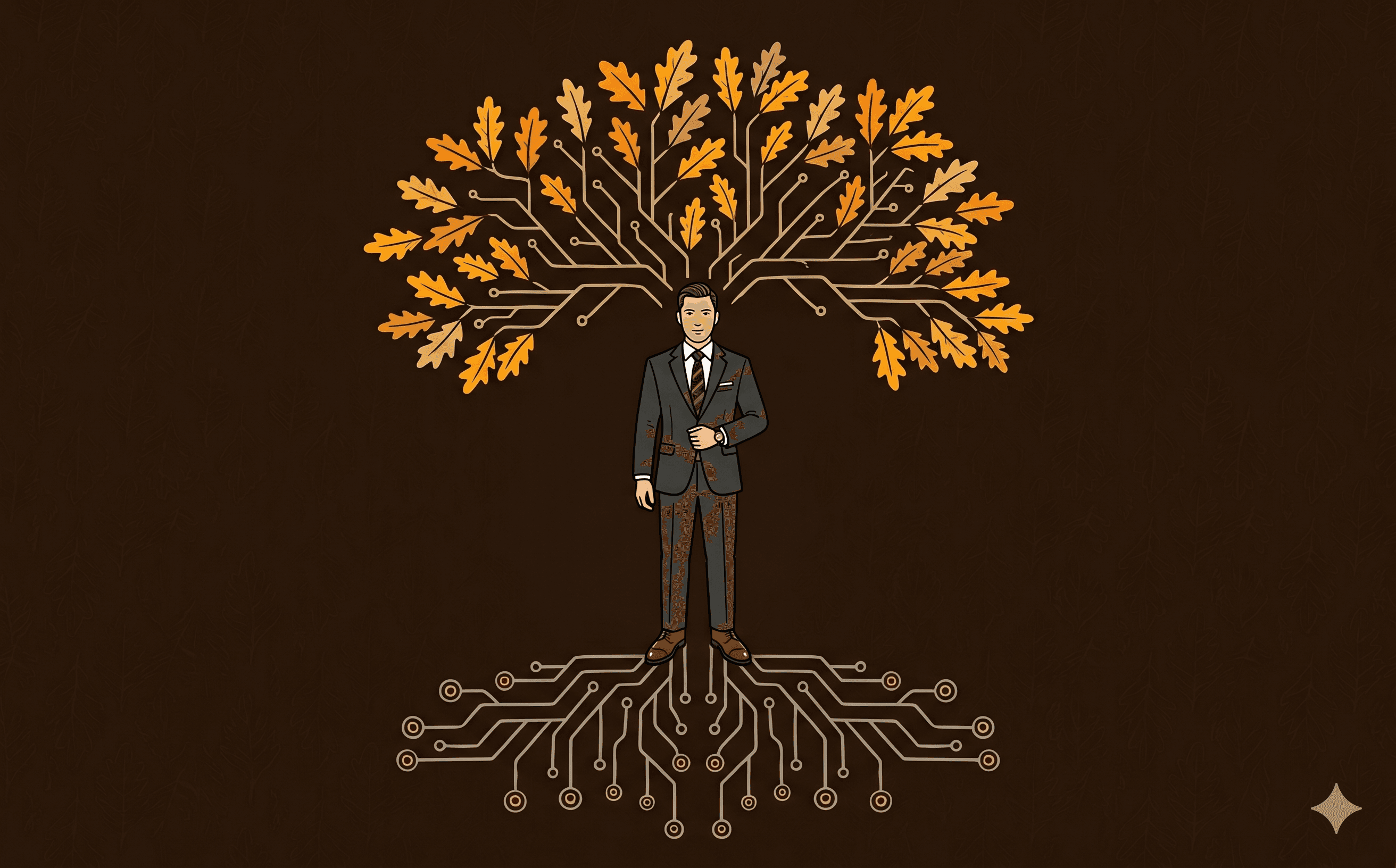
“The goal isn't to make the work disappear. It's to make the grunt work disappear.”
There are things a model simply can't reach because they don't live in a dataset.
That's the “edge case” logic that makes a local grocery chain successful. It's tribal knowledge, and it's in you, not the model.
What AI is good at is the high-volume, low-leverage tasks that eat your afternoon:
The point isn't that AI saves hours; it's that it buys you those hours back so you can spend them on the strategy that actually moves the chain forward.
We built Pin Oak with a hard constraint: nothing ships to a customer without a marketer's name on it.
The workflow is straightforward: AI drafts the subject lines, preview text, and body copy based on your current ad and your specific segments. You read it. You tweak the one paragraph that feels off. You swap a photo. You hit approve.
“You're the editor-in-chief, not the data entry clerk.”
The marketers who know the grocery business — the rhythms, the shopper psychology, and the merchant's instinct — are the ones who become more valuable with these tools.
Generic AI content created by people who don't understand the industry will lose every time to AI-supported content directed by a pro. That's the bet we're making.
If you want to see how this works, let's look at your actual circular, your actual segments, and your actual voice. That's the only way to see if the tool fits the job.
Join hundreds of grocery marketing professionals who get our latest articles, tips, and industry analysis delivered straight to their inbox.